Showing posts with label Gold. Show all posts
An impressive lake in the Wicklow Mountains in Ireland, an hour south of Dublin. Nearby there are many other sights in the mountain: various waterfalls, large boglands with sheep and streams, forests with wildlife, and historical places such as Glendalough, also other lakes. [Source]
Beautiful Golden Sun Rays in Schwarzwald, Germany. Simply out standing sun ray among the forest in Germany. [Source]
It's also known as "Temple of the Emerald Buddha." Adjoining the Grand Palace, the temple is the greatest spectacle of Bangkok. There are over 100 brightly-colored buildings, all unique unto themselves. Built in 1782 during Rama I's reign, the Emerald Buddha, which gives it its name, is traced to India, centuries after Lord Buddha attained Nirvana and then had it enshrined in Bangkok. [Source]
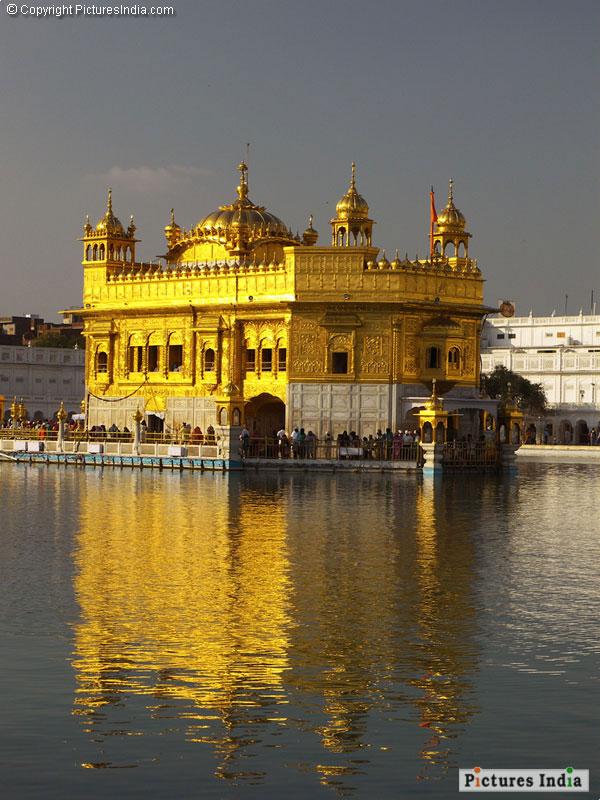
The Golden Temple, located in the city of Amritsar in the state of Punjab,is a place of great beauty and sublime peacefulness. Originally a small lake in the midst of a quiet forest, the site has been a meditation retreat for wandering mendicants and sages since deep antiquity. The Buddha is known to have spent time at this place in contemplation.Two thousand years after Buddha's time, another philosopher-saint came to live and meditate by the peaceful lake. This was Guru Nanak (1469-1539), the founder of the Sikh religion. After the passing away of Guru Nanak, his disciples continued to frequent the site; over the centuries it became the primary sacred shrine of the Sikhs. [Source]
Hawa Mahal, is a palace in Jaipur, India. Its unique five-storey exterior is also akin to the honeycomb of the beehive with its 953 small windows called jharokhas that are decorated with intricate latticework. Built of red and pink sandstone, the palace is situated on the main thoroughfare in the heart of Jaipur’s business centre. It forms part of the City Palace, and extends to the Zenana or women's chambers, the chambers of the harem. It is particularly striking when viewed early in the morning, lit with the golden light of sunrise. [Wiki]
Altar of St Mary’s church in Krakow, Poland, with triptych by Veit Stoss. It was carved between 1477 and 1489, in a Gothic style. Doors more than 20 feet in height open and close like a book. [Source]
The amazing Excalibur tower at the Bjoeks Climbing Centre in Groningen, the Netherlands. At 37m tall this is the world’s current tallest free-standing climbing wall. [Source]
The first name for Huxinting Tea House was Yeshi. Eventually, it became popular as Wanzai. Soon, it was again renamed as Mid-lake Pavilion Teahouse. The main reason why it got its latter name is because of the location of this teahouse. A small artificial lake is found in the middle of Shanghai. Right on this lake stands a beautiful pavilion. Both were constructed during the Ming Dynasty and it is attributed to an official named, Pan Yundan. Originally, both the lake and the great pavilion were considered as a part of the Yu Garden. In 1784, the pavilion went through renovations because of the orders of Qing Dynasty’s emperor Zhu Yunhui. When its beauty was revived, it emerged as a meeting place for merchants and elites. [Source]
Isma'il ibn Ahmad was the Tajik Samanid amir of Transoxiana (892-907) and Khorasan (900-907). His reign saw the emergence of the Samanids as a powerful force. Isma'il was active to the north and east, steadily spreading Samanid influence as well as solidifying his control over other areas including Kirman, Sijistan and Kabul. Ismail was successful in establishing economic and commercial development and organized a powerful army. [Source]
The Shwedagon Pagoda officially titled Shwedagon Zedi Daw, also known in English as the Great Dagon Pagoda and the Golden Pagoda, is a 99 metres (325 ft)gilded pagoda and stupa located in Yangon, Burma. According to legend, the Shwedagon Pagoda has existed for more than 2,600 years, making it the oldest historical pagoda in Burma and the world. It is the most sacred Buddhist pagoda for the Burmese with relics of the past four Buddhas enshrined within: the staff of Kakusandha, the water filter of Koṇāgamana, a piece of the robe of Kassapa and eight strands of hair from Gautama, the historical Buddha. [Wiki]